How WebRTC Protocols Work Together For Real-Time Communication
Six protocols quietly cooperate every time you make a WebRTC call, finding a path through firewalls, encrypting the stream, and keeping audio and video in sync. A plain-language tour of how ICE, STUN, TURN, SRTP, DTLS, and RTP fit together.
WebRTC (Real-Time Communication) is an essential protocol that enables real-time communication over the Internet. A handful of protocols work together to manage every part of the connection, they ensure devices can find each other and create a connection even behind network barriers, then handle the transfer of audio and video so it moves smoothly between users. On top of that, they provide strong security so conversations stay private. By integrating these protocols, WebRTC delivers a seamless and reliable experience for live interactions, which is why they show up in almost every real-time web application we build.
In this article we'll break down each of these protocols in simple terms and explain how they work together to ensure smooth real-time communication. Whether you're a developer or just curious about how these technologies make your apps run, you'll find clear and easy explanations here.
Let's explore each protocol of WebRTC and how they combine to enable smooth, real-time communication.
Exploring WebRTC Protocols
Six key protocols work together to make real-time communication smooth and efficient. Each one handles a specific role, setting up connections, transferring data, or ensuring security.
ICE: Interactive Connectivity Establishment
STUN: Session Traversal Utilities for NAT
TURN: Traversal Using Relays around NAT
SRTP: Secure Real-time Transport Protocol
DTLS: Datagram Transport Layer Security
RTP: Real-time Transport Protocol
1. ICE (Interactive Connectivity Establishment)
ICE is the protocol used in WebRTC to create peer-to-peer connections between devices. It moves around network barriers like NATs (Network Address Translators) and firewalls by gathering multiple connection candidates from both peers, then performs connectivity checks to determine the best path for data to travel. ICE negotiates the most efficient route for data exchange, ensuring a reliable connection even in complex network environments. By continuously testing different connection possibilities, ICE helps maintain a stable and responsive communication link throughout the interaction.
2. STUN (Session Traversal Utilities for NAT)
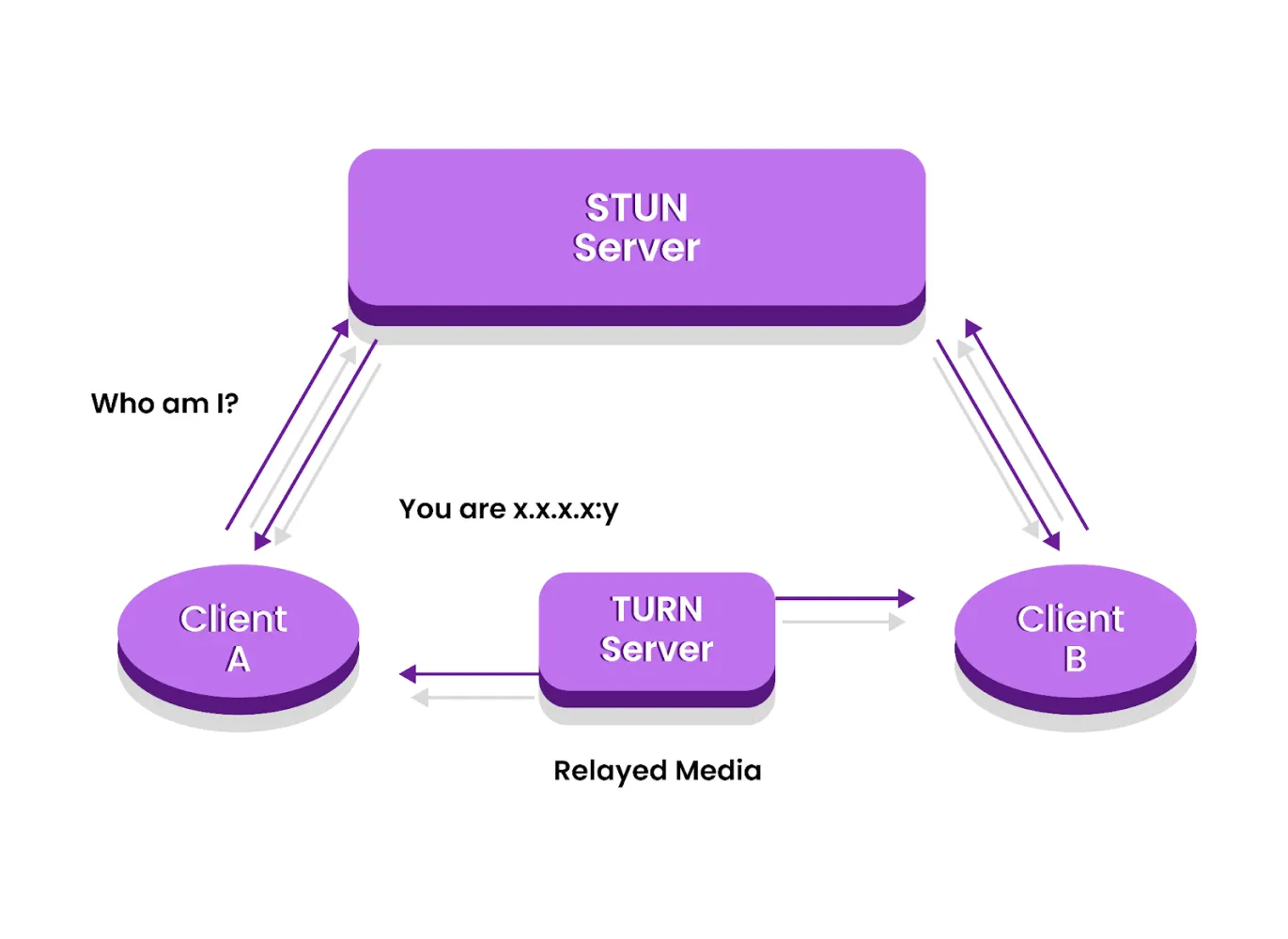
STUN is the protocol used in WebRTC to discover a device's public IP address and port when it is behind a NAT. The device communicates with a STUN server, which then provides the public address visible on the Internet. This is crucial for creating direct peer-to-peer connections, because each device needs to know how it appears to others outside its local network. By revealing the device's external address, STUN enables effective communication pathways even when devices sit behind NATs or firewalls.
3. TURN (Traversal Using Relays around NAT)
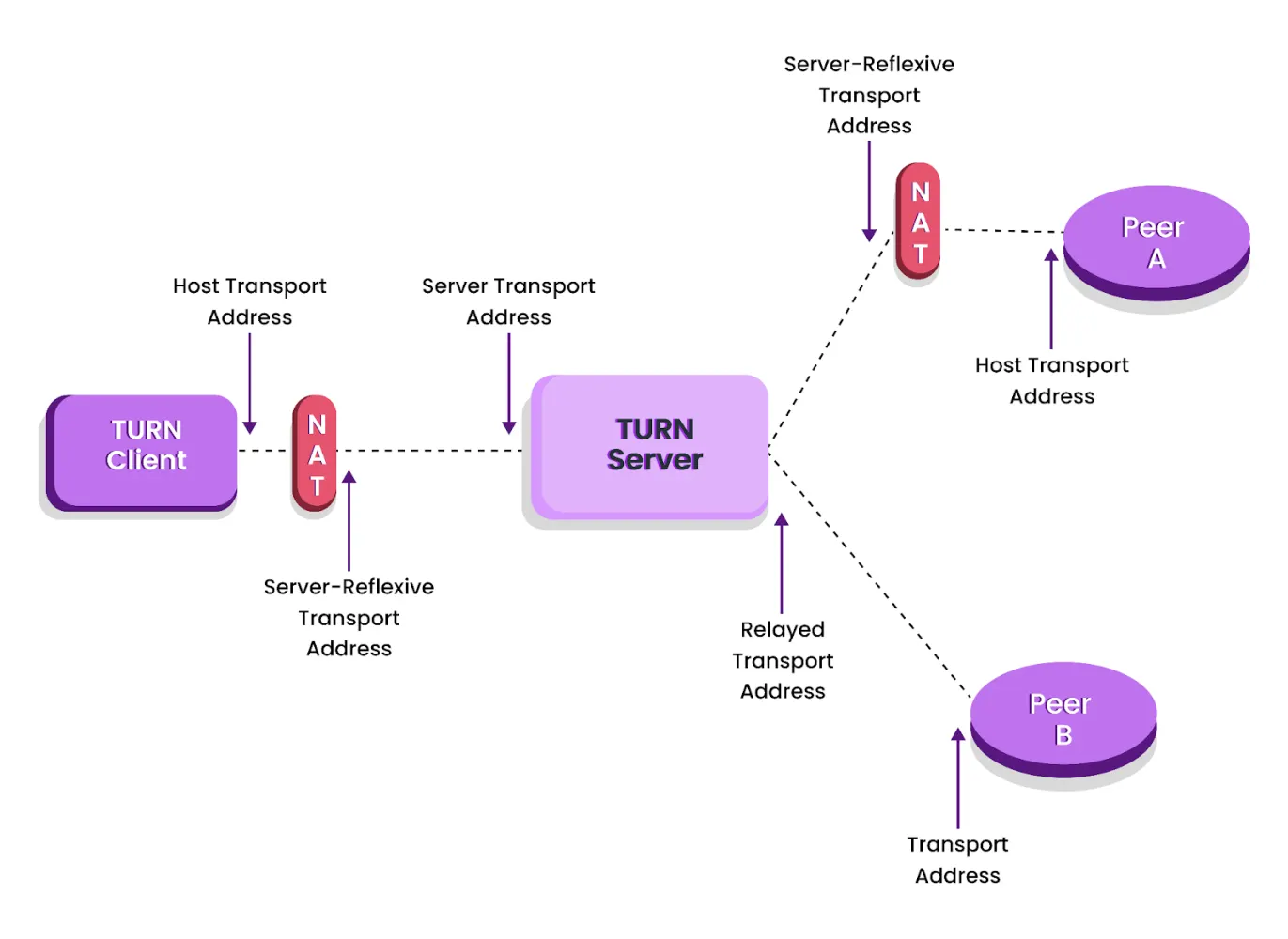
TURN is the protocol used in WebRTC to facilitate peer-to-peer communication when a direct connection isn't possible. TURN servers act as mediators or relays between devices, routing data when NATs or firewalls block direct communication. When a peer-to-peer connection fails or isn't accessible, TURN provides a fallback by relaying data through a central server, keeping communication possible even in restrictive network environments and improving the reliability and reach of real-time interactions.
4. SRTP (Secure Real-time Transport Protocol)
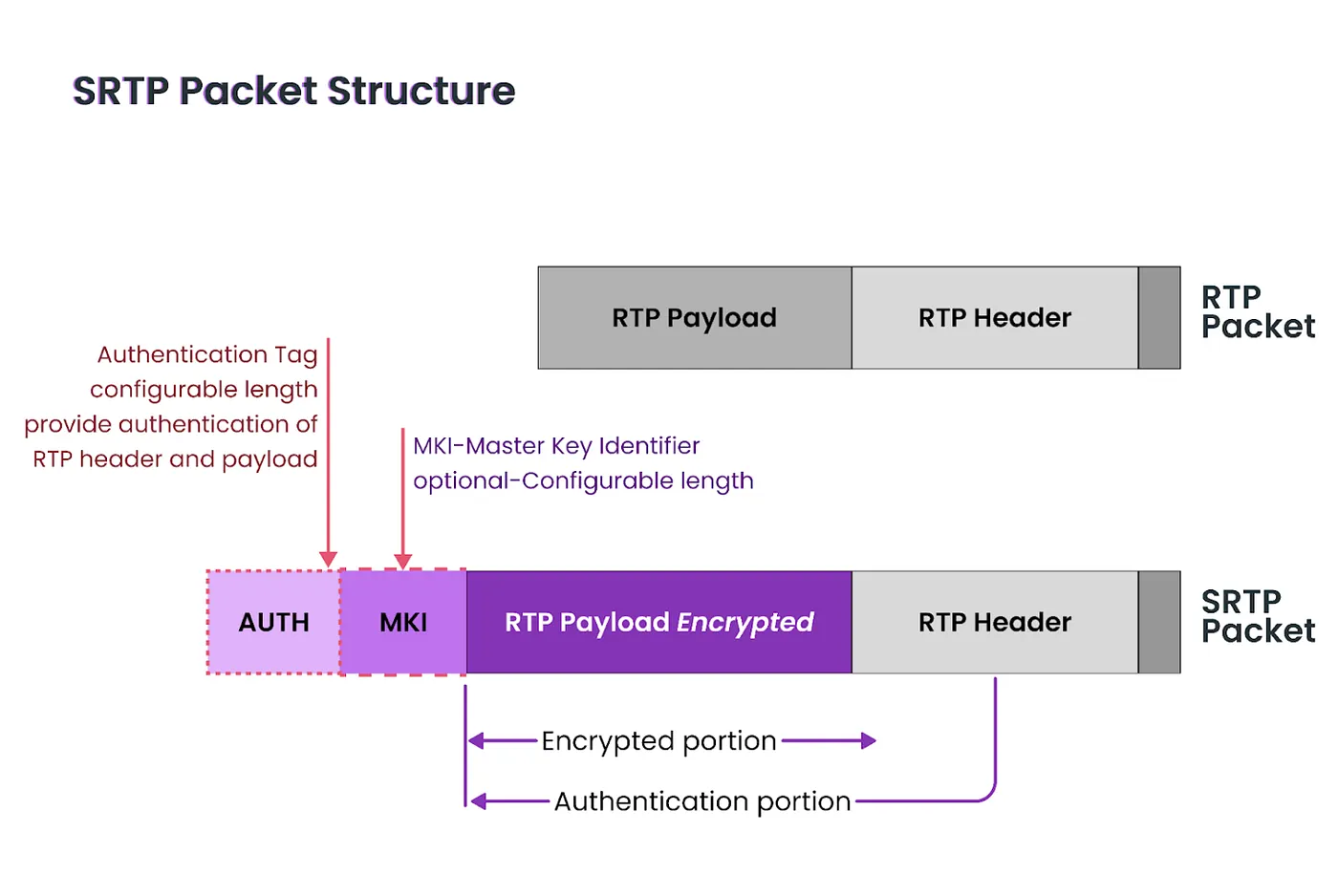
SRTP is the protocol used in WebRTC to provide encryption and data integrity for audio and video streams during transmission. SRTP encrypts the data payloads and authenticates the integrity of the transmitted media, helping maintain the privacy and security of real-time communications. By securing the media streams, SRTP plays a crucial role in protecting sensitive information and keeping conversations confidential.
5. DTLS (Datagram Transport Layer Security)
DTLS is the protocol used in WebRTC to secure data channels by providing encryption and authentication. It makes sure information shared between people stays private and can't be changed or read by others.
DTLS creates a secure connection by encrypting the data and verifying the identities of communicating parties, similar to how TLS works for TCP connections. This protocol is essential for maintaining the privacy and integrity of data exchanged in real-time communication, such as text messages or file transfers, within WebRTC applications.
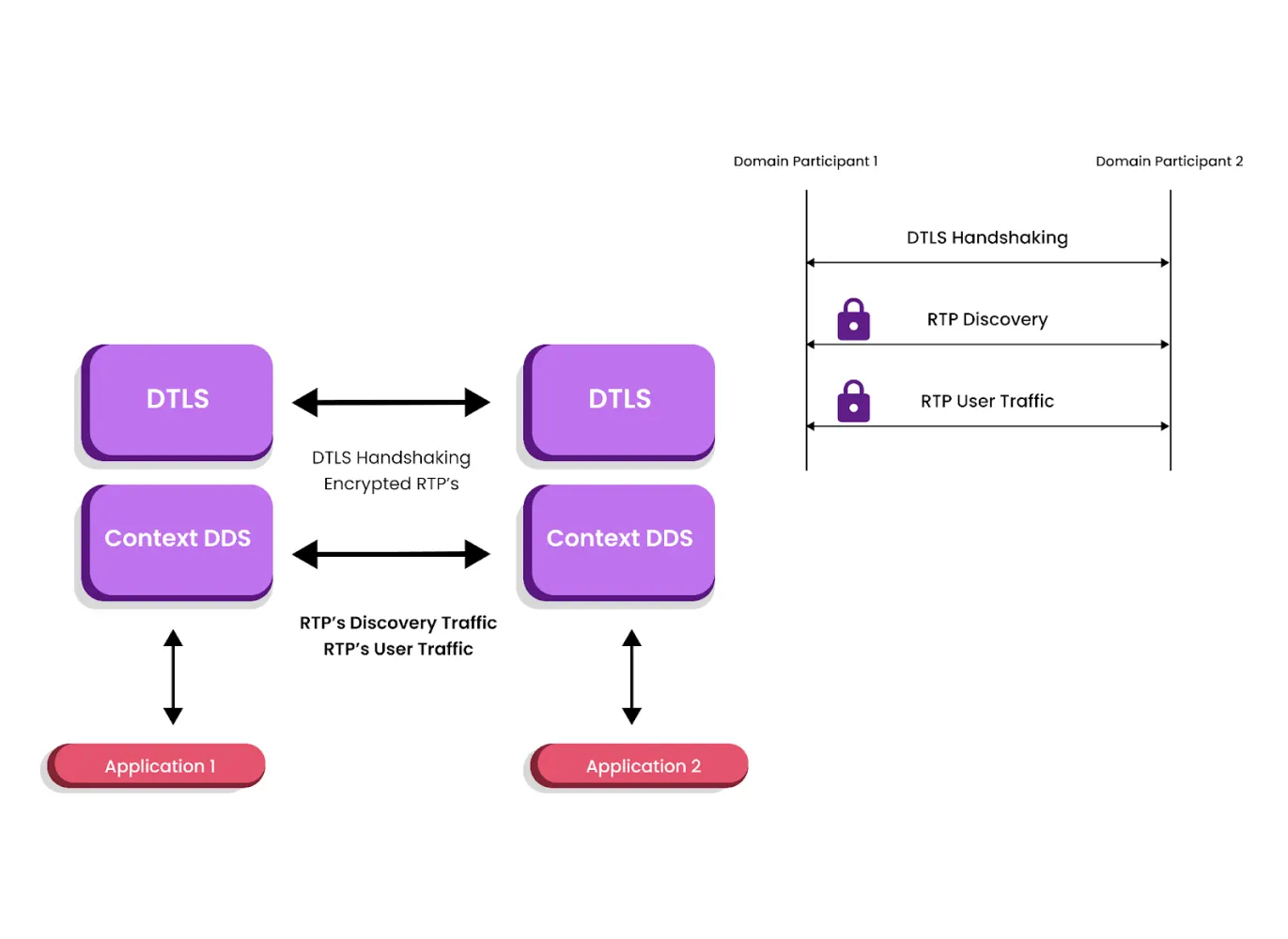
6. RTP (Real-time Transport Protocol)
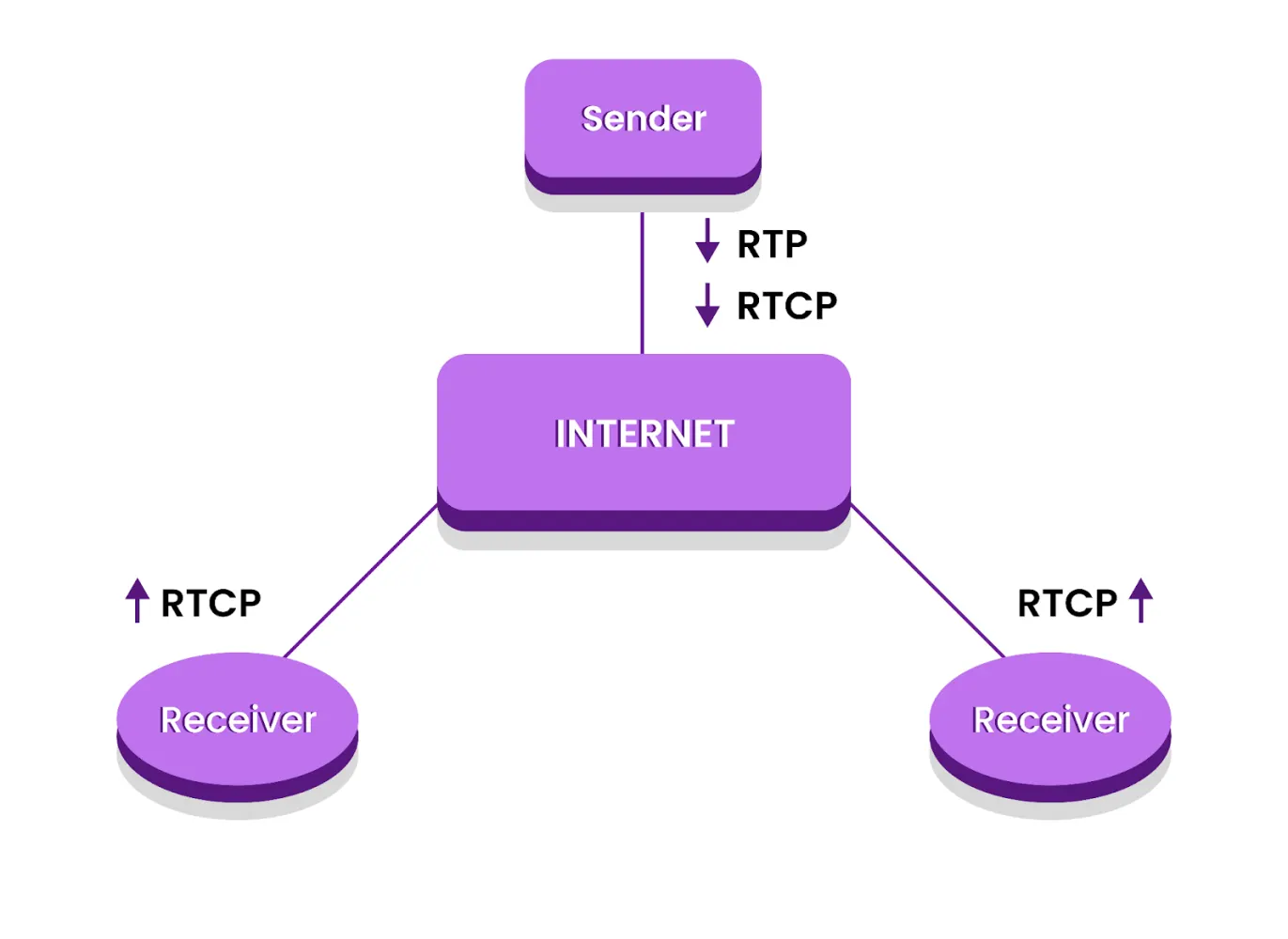
RTP is the protocol used in WebRTC to deliver audio and video data in real time. It manages media streaming by date and time and packetises the data, ensuring it's transmitted and played back in the correct sequence and timing. RTP is designed for real-time applications where timing is critical, video calls or live streaming. It typically operates alongside RTCP (RTP Control Protocol) to monitor and manage stream quality, providing feedback on packet delivery and network performance.
Conclusion
WebRTC's six key protocols (ICE, STUN, TURN, SRTP, DTLS, and RTP) work together to deliver a seamless real-time communication experience. ICE establishes peer-to-peer connections, STUN and TURN navigate network barriers, SRTP and DTLS ensure data security, and RTP handles the real-time delivery of media. Their combined functionality is what makes effective and secure real-time communication possible across diverse network environments. For a shipping example of this stack in production, see the CallHome case study.
- WebRTC
- ICE
- STUN
- TURN
- SRTP
- DTLS
- RTP
- Real-Time Communication
Related articles
How to Secure Your WebRTC Communications with Encryption: A Detailed Guide
WebRTC powers low-latency video, voice, and data across the browser, but with rising cyber threats, encryption is no longer optional. A walk-through of DTLS, SRTP, key exchange, and practical steps to keep real-time communication safe.
4 min read
WebRTC and WebSockets: Understanding Their Features and Differences
Video calls, chat, and live streaming all rely on real-time technology behind the scenes, but WebRTC and WebSockets do very different jobs. A side-by-side look at how each one works, what they're built for, and when to reach for which.
5 min read
Understanding WebRTC Screen Sharing with JavaScript: A Simple Guide
If you're new to coding or just curious about how screen sharing works with JavaScript, this guide breaks it down, from the getDisplayMedia API to a complete peer-connection setup, plus the gotchas that trip people up in production.
8 min read