WebRTC and WebSockets: Understanding Their Features and Differences
Video calls, chat, and live streaming all rely on real-time technology behind the scenes, but WebRTC and WebSockets do very different jobs. A side-by-side look at how each one works, what they're built for, and when to reach for which.
When you use the internet for video calls, chatting, or live streaming, you might wonder how these interactions actually work behind the scenes. Two technologies do most of the heavy lifting in real-time communication on the web: WebRTC and WebSockets. Choosing between them is one of the earliest architecture calls in any real-time web application build.
Both are essential for smooth, immediate web interactions, but they play very different roles. Understanding what each one does makes it much easier to pick the right tool for what you're building.
Let's explore what makes each of them unique, their distinct features, and how they compare in various applications.
What is WebRTC?
WebRTC stands for Web Real-Time Communication. It is a technology that allows users to make voice and video calls and share files directly between browsers, without needing any extra software or plugins.
Think of WebRTC as a way to talk to someone face-to-face over the internet, much like a video call on Zoom or Skype, but happening directly between two browsers.
Key Features of WebRTC
- 1
Real-time communication: WebRTC enables live, real-time audio and video communication between users. You can engage in a video chat or voice call with friends, family, or colleagues without delay or interruption, designed so conversations and meetings flow with the natural rhythm of face-to-face interaction.
- 2
Peer-to-peer connections: WebRTC uses peer-to-peer (P2P) connections. When you make a call, the data goes directly from your device to the other person's device rather than through a central server.
- 3
Built-in security: WebRTC comes with robust built-in security including end-to-end encryption. All data shared during a call (audio, video, files) is encrypted and protected from unauthorised access, keeping your conversations private throughout.
- 4
Cross-platform compatibility: WebRTC works on most modern web browsers (Chrome, Firefox, Safari, Edge), making it easy to use across different devices and operating systems.
- 5
Data sharing: WebRTC also supports direct file and data sharing between users. You can transfer documents, images, and other files easily during a call or chat session, a richer, more interactive experience without third-party services.
What are WebSockets?
WebSockets are a different technology, used for creating a constant connection between a web browser and a server. This connection allows data to be sent back and forth in real time. Imagine WebSockets as a two-way radio between your browser and the server, both can talk to each other instantly.
Key Features of WebSockets
- 1
Real-time data exchange: WebSockets make sending and receiving data in real time effortless, particularly valuable for applications that need instant updates, such as online games, chat applications, or live notifications. By keeping the connection open, the latest information arrives without delay.
- 2
Full-duplex communication: WebSockets support full-duplex communication, meaning data can flow in both directions simultaneously. The server can push updates to the browser at the same time the browser sends data back, ideal for applications that need ongoing, two-way interactions.
- 3
Low latency: WebSockets have low latency, minimal delay when sending or receiving data. This is crucial for applications that require quick responses, like live chat or stock trading.
- 4
Efficient data transmission: WebSockets use a single, long-lived connection instead of opening and closing connections repeatedly. That cuts overhead and makes data transmission more efficient.
- 5
Suitable for continuous data: WebSockets are great for applications that need to continuously send and receive data: live score updates in sports apps, streaming services, anywhere users need uninterrupted flow. The persistent connection keeps the latest content arriving in real time.
Comparing WebRTC and WebSockets
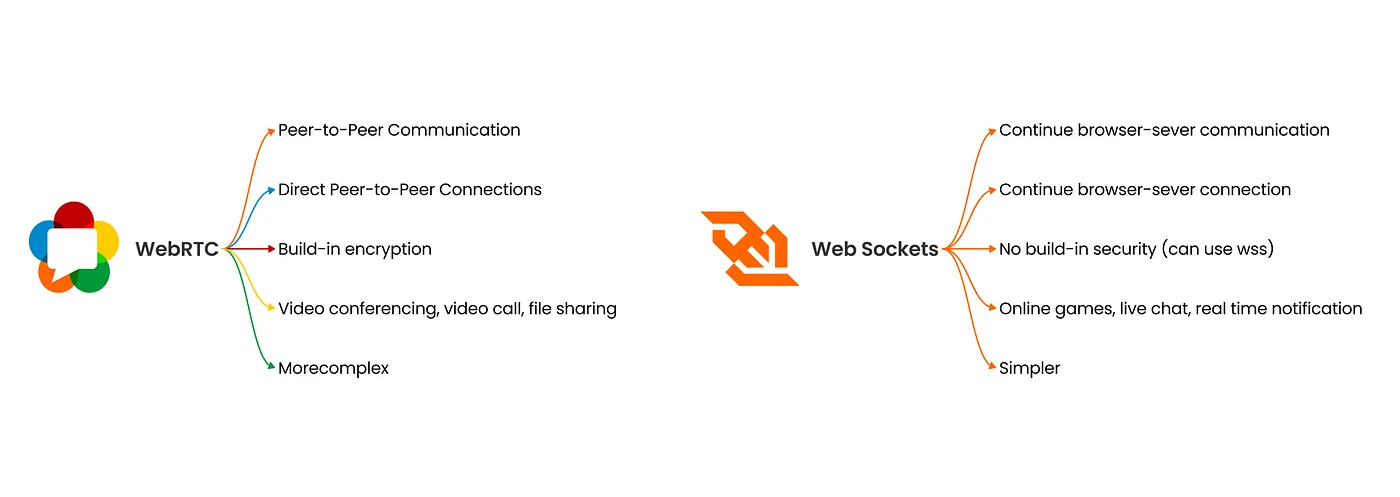
While both WebRTC and WebSockets deal with real-time data transfer, they serve different purposes and have different strengths. Here's a simple comparison:
- 1
Purpose: WebRTC is designed specifically for peer-to-peer communication such as voice, video, and file sharing. WebSockets are used for continuous, real-time communication between a web browser and a server.
- 2
Connection type: WebRTC uses direct peer-to-peer connections, so data goes straight from one user's device to another. WebSockets maintain a continuous connection between the browser and the server, allowing both to send and receive data in real time.
- 3
Security: WebRTC includes built-in encryption for secure communication. WebSockets do not have built-in security but can be used over secure connections (wss) to ensure data privacy.
- 4
Use cases: WebRTC is ideal for applications like video conferencing, voice calls, and direct file sharing. WebSockets are better suited for applications that require constant data updates, such as online games, live chat, or real-time notifications.
- 5
Complexity: WebRTC can be more complex to implement due to its peer-to-peer nature and additional features like NAT traversal. WebSockets are generally simpler and focus on maintaining a steady connection.
Conclusion
Both WebRTC and WebSockets play essential roles in enabling real-time communication on the web. WebRTC excels at direct, real-time audio and video communication, while WebSockets are perfect for continuous data exchange between a browser and a server. Understanding these technologies helps you choose the right tool for your needs, whether you're building a video chat application or a live data feed.
By recognising the unique features and applications of WebRTC and WebSockets, you can better understand how they each contribute to the real-time experiences we often take for granted online. If you want to go deeper on the WebRTC side, the six protocols behind a WebRTC call are a good next read.
- WebRTC
- WebSockets
- Real-Time Communication
- Peer-to-Peer
- Web Development
Related articles
How WebRTC Protocols Work Together For Real-Time Communication
Six protocols quietly cooperate every time you make a WebRTC call, finding a path through firewalls, encrypting the stream, and keeping audio and video in sync. A plain-language tour of how ICE, STUN, TURN, SRTP, DTLS, and RTP fit together.
5 min read
How to Secure Your WebRTC Communications with Encryption: A Detailed Guide
WebRTC powers low-latency video, voice, and data across the browser, but with rising cyber threats, encryption is no longer optional. A walk-through of DTLS, SRTP, key exchange, and practical steps to keep real-time communication safe.
4 min read
Understanding WebRTC Screen Sharing with JavaScript: A Simple Guide
If you're new to coding or just curious about how screen sharing works with JavaScript, this guide breaks it down, from the getDisplayMedia API to a complete peer-connection setup, plus the gotchas that trip people up in production.
8 min read