How to Secure Your WebRTC Communications with Encryption: A Detailed Guide
WebRTC powers low-latency video, voice, and data across the browser, but with rising cyber threats, encryption is no longer optional. A walk-through of DTLS, SRTP, key exchange, and practical steps to keep real-time communication safe.
WebRTC (Web Real-Time Communication) is widely used for browser-based video calls, voice calls, and data transfer. Its popularity stems from low latency, smooth audio/video transmission, and open-source availability. However, safeguarding WebRTC communications is essential due to increasing cyber threats. If you are shipping this in production, the cryptographic setup and the underlying cloud infrastructure both have to hold up under attack, not just work on the happy path.
What is WebRTC Security?
To secure real-time communication, WebRTC employs Datagram Transport Layer Security (DTLS) and Secure Real-Time Protocol (SRTP) to encrypt data, audio, and video streams. A secure signalling server, typically using HTTPS, establishes the connection between devices, ensuring end-to-end encryption.
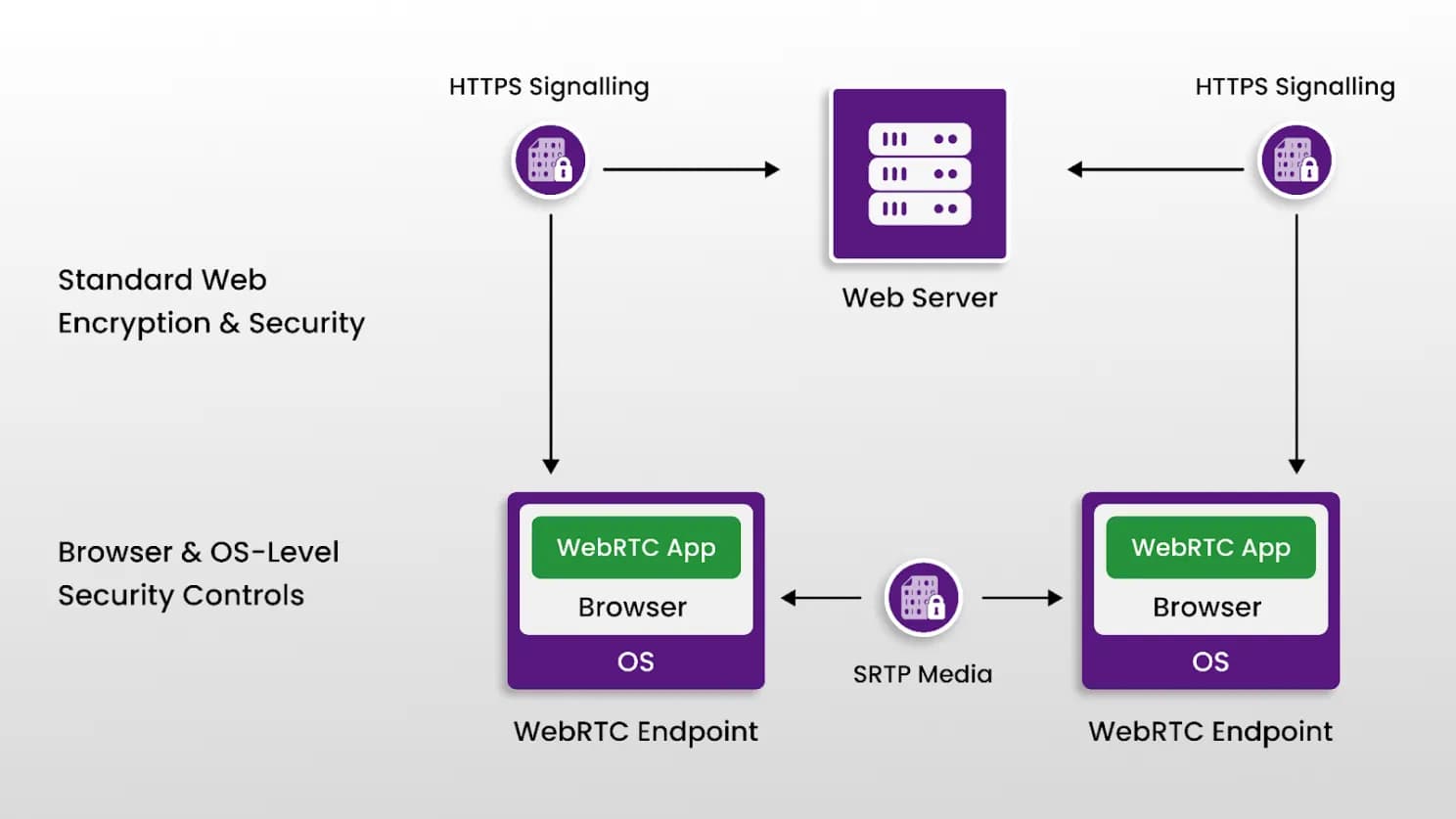
What is WebRTC Encryption?
Encryption is the process of transforming data into a code to prevent unauthorized access. WebRTC uses strong encryption standards to keep data safe, ensuring only authorized participants can decrypt the information.
Types of WebRTC Encryption
DTLS (Datagram Transport Layer Security): Encrypts data as it travels between devices in real time, ensuring nobody can intercept or tamper with it. It is a variant of TLS (used in HTTPS websites) optimised for datagrams, which are common in real-time applications.
SRTP (Secure Real-Time Protocol): Secures the actual media streams, audio and video. Even if someone intercepts the media, it cannot be decoded or altered without the proper encryption keys.
Encryption Keys in WebRTC
Symmetric keys: Both the sender and receiver share the same key for encrypting and decrypting the data. Fast, but requires a secure way to exchange the key beforehand.
Asymmetric keys: A pair of keys, a public key encrypts the data and a private key decrypts it. Even if someone has the public key, only the owner of the private key can read the data.
Is WebRTC Encryption Necessary?
Yes, encryption is required by IETF standards to protect WebRTC communications. Without it, data is vulnerable to interception, making it crucial for developers to ensure proper encryption is in place.
How WebRTC Keeps Your Data Safe
WebRTC provides robust encryption methods built around three pillars:
End-to-end encryption: Data is encrypted from the sender to the receiver, ensuring no intermediary, including the server, can access or alter it. Only the intended recipient can decrypt and read the data.
Authentication: WebRTC uses certificates to confirm the identity of the devices involved, ensuring you are connecting with the correct person or service and preventing impersonation attacks.
Consent checks: WebRTC requires users to explicitly allow access to sensitive hardware like cameras and microphones. Applications cannot activate your devices without your consent.
Common Security Threats in WebRTC
Man-in-the-Middle (MITM) attacks: A hacker intercepts the communication between two parties. WebRTC blocks this with encryption (DTLS and SRTP) and connection verification methods.
Data leaks: WebRTC can expose IP addresses and other data unintentionally. Using a VPN and configuring WebRTC to prevent IP leakage helps mitigate this risk.
Malware and spyware: Malicious software can be used to access webcams or microphones. Regular antivirus updates and avoiding suspicious downloads protect against these risks.
Best Practices for WebRTC Security
Use strong encryption: Always implement the latest encryption standards like DTLS and SRTP for secure data, audio, and video transmission.
Regular updates: Keep browsers and applications updated to benefit from the latest security patches and fixes for potential vulnerabilities.
Verify connections: Always verify the identity of the person or service you're communicating with to avoid impersonation or spoofing attacks.
Use a VPN: A virtual private network can help mask your IP address and prevent data leaks during WebRTC sessions.
Enable two-factor authentication: Where possible, enable 2FA for additional security layers, especially for sensitive communication sessions.
Conclusion
Securing WebRTC communications is vital to ensure privacy and data protection in real-time interactions. By using encryption protocols like DTLS and SRTP, verifying connections, and following best practices such as regular updates and strong encryption keys, you can safeguard your WebRTC communications from potential threats. Encryption isn't just a recommendation, it's a required standard that ensures the confidentiality and integrity of your data. For a look at how encrypted WebRTC ends up in a real product, see the CallHome case study.
- WebRTC
- Encryption
- Secure Connection
- Webrtc Solutions
- Webrtc App Development
Related articles
How WebRTC Protocols Work Together For Real-Time Communication
Six protocols quietly cooperate every time you make a WebRTC call, finding a path through firewalls, encrypting the stream, and keeping audio and video in sync. A plain-language tour of how ICE, STUN, TURN, SRTP, DTLS, and RTP fit together.
5 min read
WebRTC and WebSockets: Understanding Their Features and Differences
Video calls, chat, and live streaming all rely on real-time technology behind the scenes, but WebRTC and WebSockets do very different jobs. A side-by-side look at how each one works, what they're built for, and when to reach for which.
5 min read
What are the Benefits of WebRTC Services for the Healthcare Domain?
Technology is changing healthcare, and WebRTC is a key part of the shift, virtual visits, remote monitoring, and secure collaboration straight from the browser. A look at how the protocol is reshaping patient care and medical services.
7 min read